Colby College Museum of Art
CHIEF CURATOR
Waterville, ME
Application Deadline: Applications are no longer being accepted
The Colby College Museum of Art, located in Waterville, Maine, seeks an experienced, visionary, and highly collaborative Chief Curator to join the Museum’s senior leadership team. They will establish and direct curatorial strategy at a time of institutional transformation, develop and steward the Museum’s art collection, and lead an ambitious staff of five while contributing to the overall vitality of the museum. The role of Chief Curator presents an exceptional opportunity to shape the future of one of the nation’s leading academic museums. Its distinguished collection comprises more than 10,000 artworks representing the full breadth and complexity of American art, as well as works by international artists from antiquity to the present. By supporting research, organizing exhibitions and displays of its collection, and convening a diversity of people and perspectives, the Museum incubates art scholarship and practice to explore and expand how the idea of America is understood and how art is made, interpreted, and shared.
About the Colby College Museum of Art
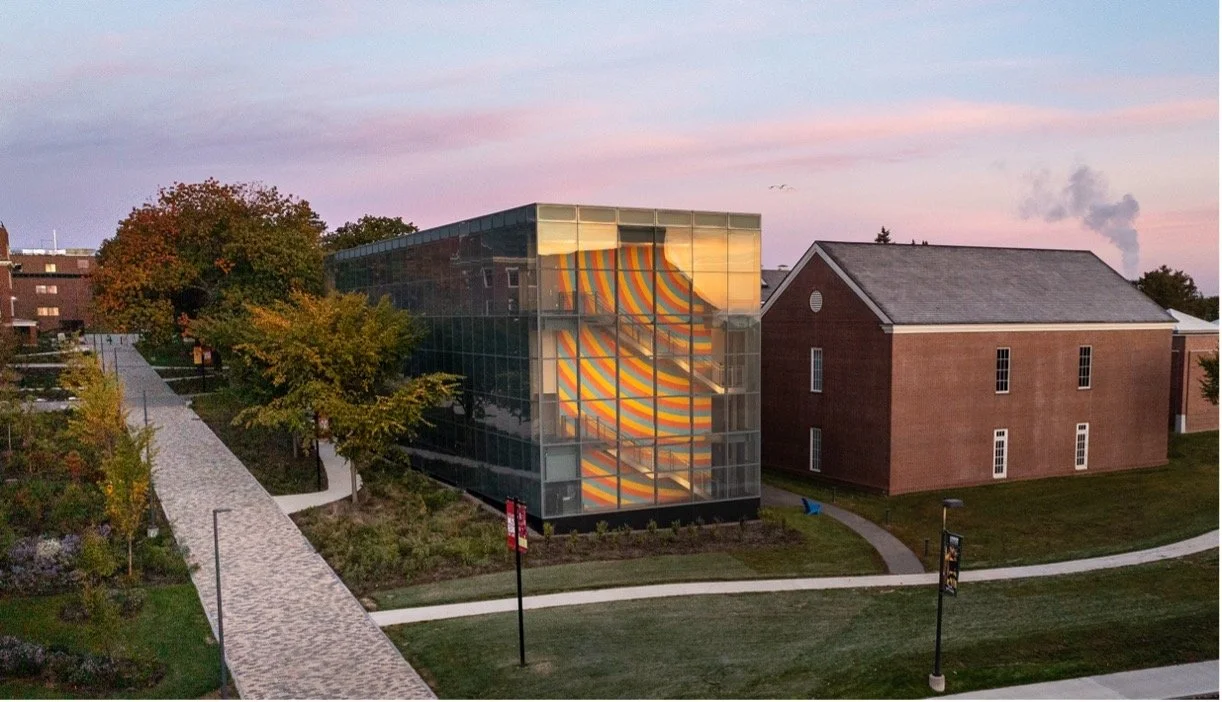
Founded in 1959, the Colby Museum is a leading academic art museum, with strengths in American art and contemporary art, at one of the nation’s preeminent liberal arts colleges. In the past decade, the Colby Museum has grown rapidly and now encompasses nearly 40,000 square feet of exhibition space. Since 2021, the Museum has expanded to include two sites in downtown Waterville: the Greene Block + Studios, where its Lunder Institute for American Art is based, and the Paul J. Schupf Art Center, which includes the Museum’s Joan Dignam Schmaltz Gallery of Art. The Museum’s artistic programming at times extends to Colby’s Island Campus, previously the home of Betsy and Andrew Wyeth, and to Colby’s Gordon Center for Creative and Performing Arts. Learning and engagement programs have also increased in reach and impact, drawing more than 16,000 people in the past year and taking place on campus, in downtown Waterville, and in the broader Waterville community. This includes collaborations with over 180 courses a year in nearly 30 departments across the College, class visits by over 3,400 K–12 students and educators each year, and varied public and community events. The Museum employs 31 full-time staff and 21 part-time staff. Its annual operating budget is $6 million.
The Museum currently organizes and presents ten to twelve exhibitions a year, many with accompanying publications, including major traveling shows. Recent exhibitions include: Gertrude Abercrombie: The Whole World Is a Mystery, the first nationally touring presentation of work by this critical figure in Chicago’s mid-twentieth-century art and jazz scenes, co-organized with the Carnegie Museum of Art; Is anything the matter? Drawings by Laylah Ali, the first retrospective exhibition to survey the artist’s prolific work in this medium; Martha Diamond: Deep Time, the first survey of the late artist’s paintings, with the Aldrich Museum of Contemporary Art; Painted: Our Bodies, Hearts and Village, a collection-based exhibition about Taos and the Taos Society of Artists from the perspective of Pueblo artists; and Bob Thompson: This House Is Mine, which garnered international acclaim and introduced many audiences to the artist’s work.
The Paul J. Schupf Wing for the Works of Alex Katz features a rotating selection of artworks from the Museum’s collection of nearly 900 paintings, drawings, prints, and sculptures spanning the artist’s entire career. Along with the Katz Archive, these holdings make the Colby Museum the institution of record on the work of this influential artist and offer countless opportunities to explore the wide-ranging sources, interactions, and perspectives that inform Katz’s practice.
The Lunder Institute for American Art was established in 2017 through the generosity of Peter and Paula Lunder and the Lunder Foundation. It supports innovative research, scholarship, and creative production that expands the boundaries of American art. Longtime benefactors in the field of American art, Peter and Paula Lunder have also made possible the acquisition of over 1,800 works of art. These unprecedented gifts have positioned the Colby Museum at the forefront of the field of American art and profoundly contributed to the Museum’s educational mission.
The Museum’s collection includes significant holdings of American paintings, sculptures, drawings, prints, photographs and new media by renowned artists such as Ansel Adams, Kathy Bradford, Mary Cassatt, Elizabeth Catlett, Frederic Edwin Church, Theaster Gates, Winslow Homer, Jacob Lawrence, Norman Lewis, Maya Lin, John Marin, Agnes Martin, Georgia O’Keeffe, Jackson Pollock, Augustus Saint-Gaudens, John Singer Sargent, Fritz Scholder, Richard Serra, Ja’Tovia Gary, Kay WalkingStick, and Nari Ward among many others. The Lunder Collection also contains one of the world’s foremost holdings of artwork by James McNeill Whistler, with more than 370 prints, drawings and paintings representing a comprehensive survey of Whistler’s career across media plus nearly 150 rare books, journals, photographs, and archival materials composing the Museum’s Whistler reference collection. The Colby Museum and its international partners foster scholarship and promote public understanding of Whistler and his artistic circles through internships and professional development opportunities, curatorial and conservation initiatives, exhibitions, publications, and programs.
Works by key international artists such as Ai Weiwei, Bernhard and Hilla Becher, Gustave Courbet, Otto Dix, Francisco Goya, Pablo Picasso, Rembrandt, and Lynette Yiadom-Boakye complement the American holdings. The Lunder-Colville Chinese Art Collection, consisting of 45 exceptional works of ritual and mortuary art dating from the prehistoric period to the Jin dynasty (1115–1234) is an important resource in the state of Maine for the study of early Chinese art and culture.
Free and open to all, the Museum advances Colby College’s educational and research mission, enriches the region’s cultural and community life, and contributes to the field of art. With an outstanding permanent collection, community-engagement programs, and path-setting exhibitions, publications, and Lunder Institute for American Art fellowships and convenings, the Colby Museum has earned a reputation as both a leading teaching museum and a premier destination for art.
The Opportunity
The Chief Curator will join the Colby Museum at a moment of ambitious institutional growth. This role offers a unique chance to shape the future of art history within a well-resourced and forward-thinking environment. Key opportunities include:
Curatorial Vision Envision a long-term Museum exhibition program and collaboratively develop an innovative model for the care of and access to its collection.
Leadership Mentor the next generation of art curators and scholars, inspiring and motivating the curatorial team and shaping their contribution to the Museum’s artistic, research, and interpretive vision.
Collection Development: Strengthen the collection through a mission-aligned acquisitions strategy and cultivate donations from artists and collectors.
Relationship Building: Inspire and connect with stakeholders across the Museum, the College, local communities, and a global network of American and contemporary art scholars and garner support for the museum’s initiatives.
Responsibilities and Expectations
The Chief Curator will partner with the Museum Director, balancing creative vision with day-to-day team and project management. They will lead development of a visionary and sustainable multiyear exhibition schedule, including traveling shows, in collaboration with Museum leadership. With input from the Board’s Collections and Impact Committee, they will guide the Museum’s collection development strategy, ensuring the ongoing documentation and care of the collection with the Collections team. They will work with the Engagement team to develop accessible interpretive approaches and support fundraising efforts with the Advancement team. The Chief Curator also collaborates with the Lunder Institute for American Art on mission-aligned fellowships, programs, and research initiatives. In addition, they will curate select exhibitions and publications and contribute original scholarship.
Leadership, Management, and Program Development
Advise the director, model institutional values and mission alignment, lead special projects, and communicate Colby College’s and the Colby Museum’s institutional priorities to staff and stakeholders.
Define and implement a curatorial vision grounded in the Museum’s context, the art field, and larger questions in contemporary life, ensuring the continued relevance of the artistic program and prioritizing engagement with constituencies and communities.
Manage and mentor staff with clarity and purpose, fostering a collaborative and high-performing work environment.
Build and maintain relationships with artists, collectors, dealers, and donors, representing the Museum locally, nationally, and internationally as an advocate for the arts and the College’s mission.
Develop and refine effective and collaborative processes for curatorial work.
Collaborate with exhibition and senior leaders on annual and multiyear budgets and contracts, ensuring transparency and maximizing resources for academic and public benefit.
In keeping with Colby’s values, model and encourage self-awareness in matters of equity and access. Support staff learning and professional growth.
Collection Development and Stewardship
Develop and execute the long-term strategy for the Museum’s collection, ensuring its excellence and distinction. Set policies and practices in collaboration with key staff and with guidance from the Museum Board of Governors. Lead acquisition and deaccession processes and serve as liaison to the Board’s Collections and Impact Committee.
Direct the full acquisitions cycle—identifying, evaluating, and proposing artworks that add value to the collection—and cultivate relationships with artists and collectors to support purchases and gifts.
Guide the curatorial team’s role in documentation, storage, conservation planning, and maintenance of archives, as well as in developing digital access and workflows that support collection stewardship.
Contribute curatorial expertise to the development of educational and collection-based initiatives in art conservation.
Contribute curatorial leadership to the College’s art-on-campus program.
Exhibitions, Publications, and Programs
Exhibition Schedule: Plan a robust and multiyear exhibition program in partnership with the director of exhibitions and publications and help secure institutional and co-producing partners.
Curatorial Leadership: Guide curatorial staff in creating exhibitions and programs that leverage the collection and both deepen and broaden narratives of art, especially American art.
Curation: Initiate or serve as venue curator for selected projects and oversee curation of permanent collection galleries, delegating as appropriate.
Process and Structure: Develop inclusive, effective processes for proposing exhibitions and facilitate cross-departmental work across exhibitions, research, collections, interpretation, engagement, and publications.
Learning and Engagement: Shape interpretive and pedagogical strategies, create content, serve as art department liaison, contribute to active faculty outreach, and at times lead public programs and class visits.
Scholarship and Interpretation: Produce and edit scholarly publications, essays, exhibition texts, labels, and digital content.
Community: Participate in cross-departmental and community initiatives and actively represent the Museum locally, nationally and, at times, internationally.
External Communications and Fundraising
Engage collectors and donors to support exhibitions, acquisitions, and Museum priorities in coordination with Museum leadership and Advancement colleagues.
Cultivate donors and solicit gifts of art; partner with the Director to steward relationships with key benefactors and artists and report on donor engagement.
Provide content for fundraising and communications, including drafting grants and reports.
Represent the Museum through media, digital platforms, and public appearances.
Participate in local, regional, and art-world events to strengthen visibility of the Museum and learn from communities and partners.
Build positive relationships with the Museum Board of Governors, engaging them with the Museum’s artistic program, and serve as liaison to the Collections and Impact Committee.
Experience, Skills, and Attributes
Master’s degree required. The Museum will consider candidates from a range of areas of expertise; knowledge of American art history is required.
Track record of scholarship and of working relationships with living artists, exhibition making, and collections.
At least seven years of experience working in the arts, culture, and/or education; minimum of five years of progressive leadership experience in curatorial practice in exhibition, publications, collections, and artistic program management.
Distinguished track record of planning and realizing exhibitions and publications, conducting strategic collections research and development, and collaborating on interpretation and public programs.
Demonstrated ability to motivate, manage and mentor staff, students, and/or emerging professionals, including skills in fostering teamwork, transparency, and accountability.
Demonstrated organizational skills and ability to establish and communicate priorities; well-developed project and budget management skills, cross-departmental leadership and collaboration skills, meeting management, negotiation skills.
Exceptional written and oral communication skills, including interpersonal skills and public speaking; ability to compellingly communicate the Museum’s mission, vision, and artistic program to a diversity of audiences.
Ability to identify opportunities that expand the narratives offered by the Museum’s collections and programs, engaging community stakeholders in exhibition making and interpretation as appropriate.
Ability to foster an environment supportive of people from different cultures, backgrounds, and life paths through daily practices and positive work culture.
Commitment to the Museum’s mission, vision, and values and demonstrated belief in the value of a liberal arts education.
Even if you do not meet all the qualifications for this position, we encourage you to apply if the majority of the job description aligns with your skills and experience.
Compensation
The salary range is $130,000–150,000 commensurate with experience, plus an attractive benefits package.
How to Apply
Applications are no longer being accepted.
Please include:
A cover letter articulating why you are interested in the position and giving brief examples of past related experience.
A résumé.
The names and contact information for three professional references, indicating their relationship with the applicant.
A portfolio of work in PDF format including photos of relevant exhibitions managed plus samples of exhibition text and scholarly writing will be required from candidates who advance in the search.
Applicants are encouraged to apply early, as candidates will be considered on a rolling basis. All applications and nominations are kept confidential; we will not contact references without your permission. Nominations are welcome. For more details, visit: www.Museum-search.com/open-searches
Questions should be directed to Kathy Fredrickson, Senior Search Consultant, Museum Search & Reference, via SearchandRef@museum-search.com.
About Colby College
Founded in 1813, Colby College is the twelfth oldest liberal arts college in the United States. Distinctive in its offerings, Colby provides an intimate, undergraduate-focused learning environment with a breadth of programs presenting students and faculty with unparalleled opportunities. Colby’s model provides the scale and impact of larger universities coupled with intensive learning in a community committed to scholarship and discovery, multidisciplinary approaches to integrated learning, study in the liberal arts, and leading-edge programs to address the world’s most complex challenges. Its network of partnerships with prestigious cultural, research, medical, and business institutions extends educational and scholarly collaborations, providing students with unmatched experiences leading to postgraduate success. The College’s wide variety of programs and labs provides students and the community access to unique experiences in sports, creative and performing arts, artificial intelligence, and environmental sciences.
About Waterville
Located on the Kennebec River, Waterville, Maine is a college town with a population of 17,000. A vibrant community in a gorgeous natural environment, Waterville offers a blend of small-town charm, a sophisticated arts scene, and growing food culture. The mountains of western Maine, the town of Brunswick, and the spectacular Maine coast can be reached in under an hour. The state capital, Augusta, is 23 miles to the south and can be reached in under 30 minutes. Portland, the largest city in Maine and home to some of the country’s best restaurants, is just over an hour away. This easy access to the towns of Augusta, Brunswick, and Portland affords flexibility for families seeking dual job opportunities.
Community engagement with the town of Waterville is core to the identity of Colby College and the Colby Museum of Art. Over the last decade, this commitment has driven significant economic growth, civic engagement between the students and the community, and cultural enrichment in the form of numerous revitalized downtown spaces. The College has completed $85 million in catalytic projects to ensure Waterville is a vibrant community in which to live, work, and visit; these efforts have attracted $60 million in external support and mobilized more than $200 million in development.
The $18 million Paul J. Schupf Art Center opened in 2023 and houses galleries, performance spaces, a café, and three state-of-the-art screens that now host the city’s venerable Maine Film Center and its Maine International Film Festival, now in its 29th year in Waterville. Connected via skybridge is the just-renovated 1902 Waterville Opera House. The Film Center was recognized by Yankee magazine as one of "The Best 5 Cinemas in New England." On the first Friday of every month, the community gathers on Main Street to meet artists, take in live performances, and eat and shop at local businesses.
Opened in 2021, the Greene Block + Studios support the Lunder Institute for American Art and student and community exhibitions and performances, with workspace on its upper floors for visiting artists and flexible gallery space downstairs for exhibits, performances, and events.
Outdoor enthusiasts will enjoy Quarry Road Trails, a year-round outdoor recreation destination. Located two miles from downtown Waterville, Quarry Road’s trails and open spaces offer world-class groomed Nordic ski trails and singletrack for snowshoeing, mountain biking, and hiking. The College hosts multiple sports events, and Waterville boasts a city-owned golf course. The city offers a good school system, affordable housing, and walkability.